Chinese Communist Power Turbulence Impacts Taiwan Strait
United Daily News Commentary, January 27, 2026
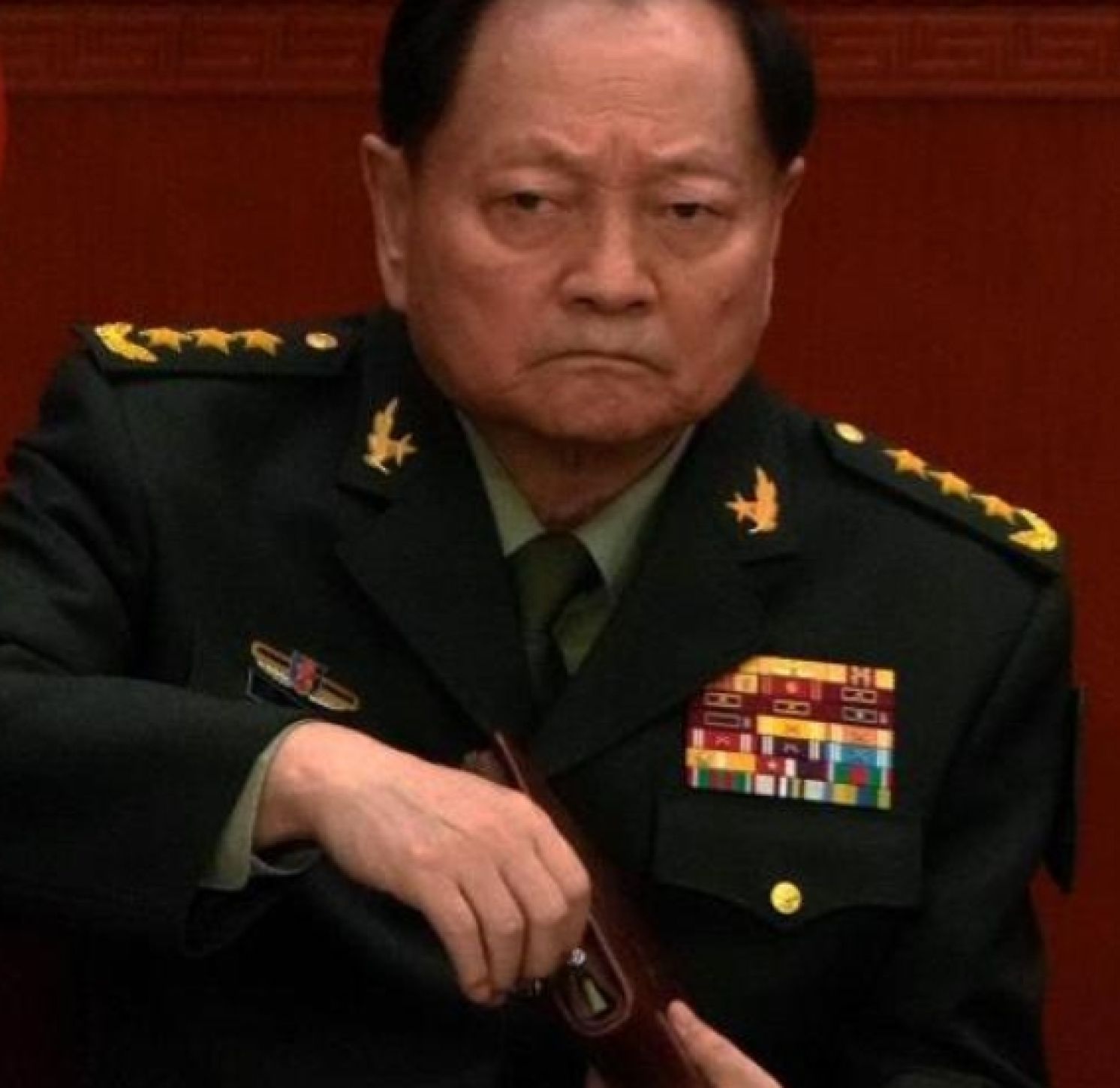
Communist China’s purge of the People’s Liberation Army’s (PLA) top leadership in early 2026, if viewed merely as an anti-corruption drive or a disciplinary rectification, undoubtedly underestimates the historical weight of the event. What is truly chilling about the Zhang Youxia case lies in its highly structural similarity to the “Lin Biao incident” half a century ago—the target of the purge is not a peripheral figure, but the most senior military figure closest to the core of power, long regarded as one of “our own.”
Back then, even in the late stage of extreme power concentration, Mao Zedong chose to strike decisively at Lin Biao, his anointed successor, plunging China into deeper distrust, fear, and political disorder. Today, Zhang’s fate is, to a certain extent, replaying this historical trajectory: purges are no longer about repairing the system, but about eliminating any presence that could potentially constitute a check on power. What impact such political purges will have on the mainland’s stability architecture is being closely watched worldwide.
For Taiwan, this is not a historical metaphor that can be observed from the sidelines, but a real warning that must be taken seriously.
Indeed, from the perspective of military technology and organizational operations, the PLA’s short-term combat capability—especially its ability to execute highly complex cross-strait joint operations—will inevitably suffer a severe blow. Disrupted command chains, the loss of senior-level experience, and a political atmosphere in which everyone fears for themselves are all unfavorable to any high-risk military action. This is why some scholars believe that, in the short term, the likelihood of a large-scale PLA attack on Taiwan has actually declined.
However, the irony of history lies precisely here: the level of war risk has never depended solely on capability, but also on whether the power structure itself is rational. After the Lin Biao incident, China did not become more stable because the military had been “cleaned up.” On the contrary, extreme centralization of decision-making and severe information distortion pushed the country in an even more unpredictable direction.
What the Zhang case reveals is precisely this kind of structural risk. When the top Chinese Communist leader’s greatest distrust toward military generals lies not in whether they are corrupt, but in whether they possess independent authority and professional judgment, the entire military decision-making system ceases to take “probability of victory” as its highest principle and instead pivots toward “political security.” In such a system, no one dares to be the bearer of bad news, no one dares to hit the brakes, and what ultimately remains is only compliance and guesswork.
This, in turn, increases rather than reduces the variables in the Taiwan Strait situation. In the short term, there may be a reluctance to fight, but in the long run, as power struggles persist, legitimacy anxiety deepens, and the external environment deteriorates, military action may instead be seen as a tool to divert internal pressure and demonstrate leadership authority. This is precisely the deep-rooted reason why, after the Lin Biao incident, Chinese politics repeatedly slid into extreme paths.
Complicating matters further is the interplay of external factors. Some American scholars have described Trump-style unreliability as the formation of a “perfect storm” in the Taiwan Strait—not because it necessarily escalates conflict, but because its highly transactional and low-predictability nature further amplifies Beijing’s strategic anxiety. In a system lacking internal checks and balances, external uncertainty does not foster calm; it induces miscalculation.
In other words, when U.S.-China-Taiwan relations all fall into a state of mutual unpredictability, the risk of misjudgment is bound to rise. Whether in the operation of U.S.-China relations or in mutual perceptions and suspicions, this will render any notion of “U.S.-China co-management of the Taiwan Strait” uncontrollable and unpredictable—and it is precisely this unpredictability that constitutes the greatest risk to the Taiwan Strait.
For Taiwan, this means it must simultaneously avoid two misjudgments: first, treating the purge as the other side’s “self-sabotage” and thereby underestimating long-term risks; second, over-amplifying the threat and attributing all policy failures and governance problems to external enemies, thereby weakening its own capacity to respond. When assessing the risks of cross-strait interaction, all sectors in Taiwan must factor in the mainland’s current political situation. Advances and retreats alike require more careful evaluation and calibration—this will not be a simple question of war or peace.
The truly mature response lies in acknowledging uncertainty and preparing for its evolution. The competition between ruling and opposition parties should not be about who can shout slogans more loudly, but about who can return national security and defense decision-making to professionalism, strengthen societal resilience against gray-zone conflicts and sudden crises, and honestly explain to the public: a fight may not break out today, but the future is harder to predict, and all sides must respond with caution.
The Lin Biao incident did not bring Mao lasting stability, nor will the Zhang case make China more stable. For Taiwan, this is not a moment to breathe a sigh of relief, but a historical juncture that demands greater prudence and greater calm.